
Adult Orthodontics Northern Beaches
Orthodontic treatment is not limited to children and teenagers. Healthy teeth can generally be moved at any age. Adult treatment planning often needs to take into account factors that are less common in younger patients, including previous dental work, gum and bone support, missing teeth, tooth wear, implants and previous orthodontic treatment.

Am I too old for orthodontic treatment?
No. Healthy teeth can be moved at any age, and adult treatment is a significant part of our practice. Because the jaws have finished growing, adult treatment is planned to work carefully with your teeth and any previous dental work you may have. Many adults choose treatment to improve the position of their teeth or their bite. Some have had orthodontic treatment before and noticed their teeth have shifted, while others are considering it for the first time.
Why Specialist Planning Matters for Adults
Healthy teeth can be moved at any age, but moving teeth as an adult requires a gentle, thoughtful approach. Because the jaws have finished growing, treatment is carefully planned to work with your teeth and any previous dental work you may have.
- Protecting gums and bone: We use gentle, low-force movements to align your teeth while looking after the long-term health of your gums and supporting bone.
- Working around previous dental work: Our plans are designed to respect existing fillings, crowns, bridges and implants that are firmly in place and cannot be moved.
- Coordinating with your dentist: If you are planning to replace a missing tooth, we can position the surrounding teeth first, so your dentist can place a stable bridge or implant afterward.
- Addressing teeth that have shifted: If you had braces years ago and your teeth have moved since, treatment can focus on targeted correction to bring the alignment back.
Braces or clear aligners for adults?
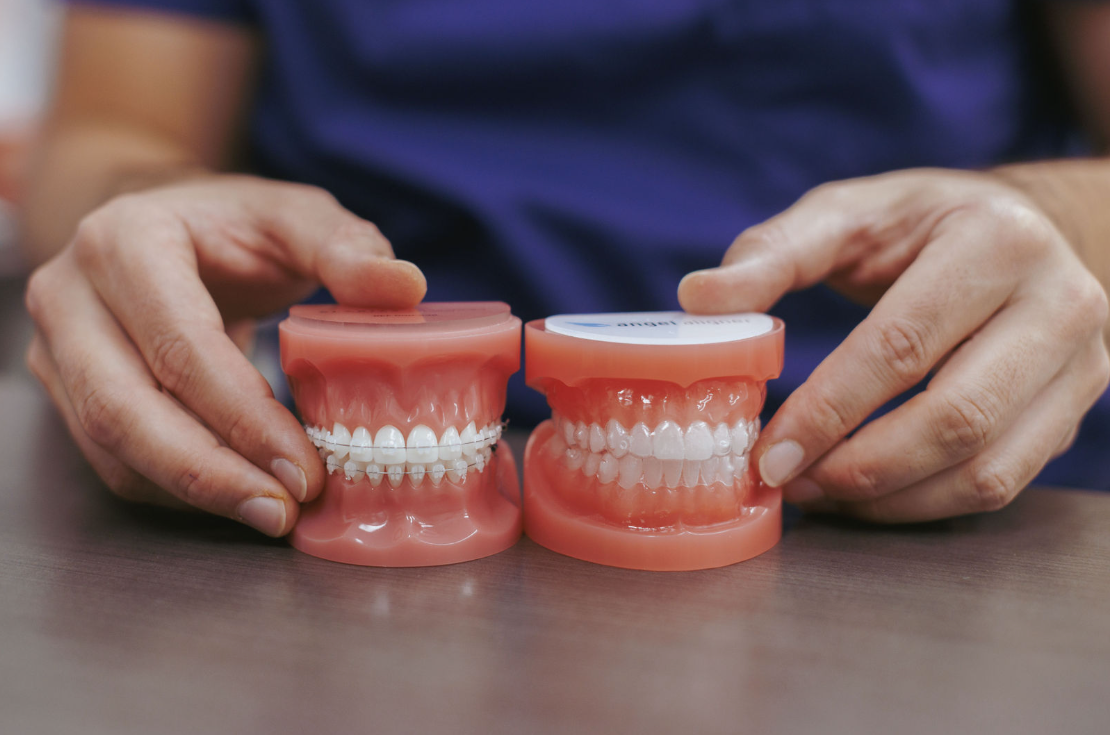
Both braces and clear aligners can be effective for adult orthodontic treatment. Clear aligners such as Invisalign, Spark and Angel Aligners may be suitable where the required movements can be controlled predictably and the patient is able to wear them consistently. Braces may provide better control for certain tooth movements or more complex bite corrections. The choice of appliance should be based on the treatment objectives rather than appearance alone.
Choosing the Right Fit for Your Lifestyle
Clear Aligners (Invisalign / Spark)
A discreet, removable system using a series of custom-made clear trays to gradually guide your teeth into position.
- Discreet: not invisible, but unobtrusive in most work and social settings.
- Removable for eating: take them out for meals, then clean your teeth and replace them.
- Straightforward hygiene: brushing and flossing continue as normal.
- Note: requires the discipline to wear them around 22 hours a day to stay on track.
Modern Fixed Braces
A reliable, fixed option using low-profile metal brackets or subtle, tooth-coloured ceramic brackets.
- Always working: fixed to the teeth, so there is nothing to remember to wear.
- Well suited to complex movement: efficient for trickier tooth corrections and bite adjustments.
- Discreet options: ceramic brackets are more subtle than traditional metal.
- Note: requires extra care when cleaning, and avoiding very hard or sticky foods.
Previous orthodontic treatment and relapse
Some degree of tooth movement after previous orthodontic treatment is common, particularly if retainers have been lost, broken or not worn as recommended. The amount of relapse can vary considerably. In some cases, relatively limited treatment may be sufficient. In others, more comprehensive treatment may be required before new retainers are made. The treatment plan should also consider why the teeth have moved and how the result will be retained afterwards.
Gum health and periodontal considerations
Healthy periodontal support is important before and during orthodontic treatment. Where there is gum recession, reduced bone support or a history of periodontal disease, tooth movement may need to be planned more conservatively. In some cases, treatment is coordinated with a periodontist or general dentist before or during orthodontic treatment.
Crowns, veneers and implants
Existing crowns, veneers and implants do not necessarily prevent orthodontic treatment, but they can influence the treatment plan. Dental implants cannot be moved orthodontically, so their position may affect how surrounding teeth can be moved. Crowns and veneers may also affect attachment placement, bonding and the final restorative plan. These factors are considered before treatment begins.
Orthodontics before implants or restorative dentistry
Orthodontic treatment is sometimes used to improve tooth position before implants, crowns, veneers or other restorative treatment. This may involve creating or closing space, correcting tooth angulation or improving the position of the surrounding teeth before the restorative work is completed. Where necessary, treatment can be coordinated with the patient's general dentist, prosthodontist, periodontist or oral surgeon.
Missing teeth
Missing teeth can create additional treatment decisions. Depending on the individual case, orthodontic treatment may be used to close the space, redistribute space for future restorative treatment, or improve the position of adjacent teeth before an implant or bridge. The most appropriate option depends on the bite, tooth position, available space, age and the overall restorative plan.
Tooth wear and bite problems
Tooth wear can sometimes be associated with the way the teeth meet. Orthodontic treatment may form part of a broader plan to improve tooth position and create a more suitable foundation for restorative treatment. The extent to which orthodontics can help depends on the cause and severity of the wear and the condition of the teeth.
What happens at the first consultation?
At the first visit, we assess the teeth, bite, periodontal condition and existing dental work and discuss the reason for the consultation. Clinical photographs and a digital scan are usually taken, and existing X-rays are reviewed where available. Additional imaging may be required depending on the findings.
The consultation will usually cover:
the orthodontic diagnosis
whether treatment is appropriate
braces, clear aligners or other reasonable options
any limitations related to gum health or existing dental work
expected treatment duration
retention after treatment
Where orthodontic treatment needs to be coordinated with other dental treatment, this can be discussed as part of the overall plan.
Treatment that fits adult life
Adults are often balancing work, family and other commitments, so treatment needs to be clear, organised and manageable. Located in Dee Why Grand, our practice is convenient for adults from Dee Why, Brookvale, Collaroy, Narraweena, Freshwater, Curl Curl, Manly, Balgowlah, Beacon Hill, Frenchs Forest and surrounding Northern Beaches suburbs.
Related orthodontic information
Invisalign & Clear Aligners
Learn more about discreet clear aligner treatment for adults.
Retainers
Find out what to do if your teeth have shifted after previous orthodontic treatment.
Orthodontic Second Opinions
Get clear advice if you are unsure about a previous recommendation.
Wondering whether orthodontic treatment can fit discreetly around work, family and everyday life?
If you are considering orthodontic treatment as an adult, we would be happy to help you understand your options and choose the right next step.