
Children’s Orthodontist Northern Beaches
Orthodontic assessment in childhood is mainly about identifying problems that may benefit from earlier treatment and monitoring everything else until the appropriate time. Many children do not need treatment when they are first assessed. The decision to treat early should be based on whether intervention is likely to provide a meaningful benefit compared with waiting for further growth and dental development.
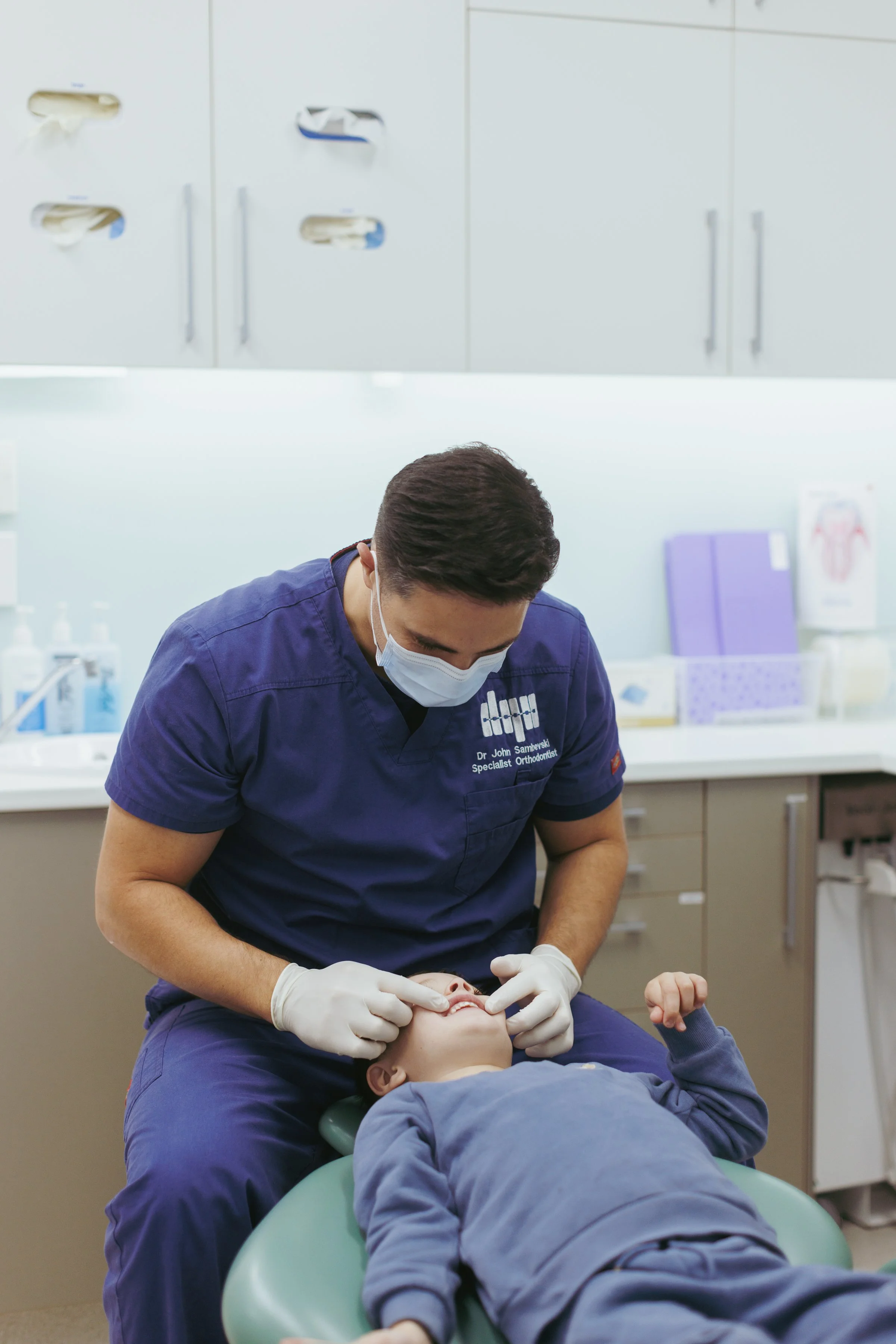
Early assessment does not mean early treatment
One of the most important aspects of children's orthodontics is timing. Starting too early can sometimes lead to unnecessary steps, while waiting too long can make corrective care more complex. Our role is simply to help map out the right time to act.
A first orthodontic assessment is generally recommended around the age of eight. At this stage, a mix of primary and permanent teeth allows us to see exactly how the bite, jaws, and teeth are developing. In most cases, treatment isn't needed straight away- the most valuable outcome is simply a clear plan to monitor their growth until the time is right.
When should a child first see an orthodontist?
A child can be assessed before all of the permanent teeth have erupted if there are concerns about the bite, jaw development, eruption of the teeth or significant crowding. The purpose of an early assessment is not to start treatment automatically. In many cases, the most appropriate recommendation is simply to monitor growth and eruption and review the child again at a later stage.
When can early treatment be useful?
Earlier treatment may be helpful in selected situations, including:
crossbites or functional shifts
significant protrusion of the upper front teeth
eruption disturbances
impacted or ectopic teeth
significant space loss
some developing jaw relationship problems
selected bite problems where growth may influence treatment
The benefit of treating early depends on the individual diagnosis. Some problems are easier to manage during growth. Others can be treated just as effectively later, once more permanent teeth have erupted.
When is it better to wait?
Not every orthodontic problem improves by starting treatment earlier. For many children with crowding or mild bite problems, monitoring development and treating later may produce an equally appropriate result with less overall treatment. Starting too early can sometimes result in a longer total period of orthodontic care without improving the final outcome. For this reason, treatment timing is based on the problem being treated rather than age alone.
Crowding in children
Crowding is common as the adult teeth begin to erupt. The presence of crowding does not automatically mean that a child needs an expander or early braces. Assessment may include the amount of available space, tooth size, eruption pattern, jaw width, bite and future dental development. In some cases, treatment is indicated early. In others, observation is the better option.
Expanders
An expander may be useful when the upper jaw is too narrow relative to the lower jaw, particularly where there is a crossbite or transverse discrepancy. Expansion should have a specific treatment objective. Crowding alone is not, by itself, a reason to expand the upper jaw. Where expansion is not clearly indicated, monitoring development and treating later may be more appropriate.
Protruding front teeth
Children with significantly protruding upper front teeth can be at greater risk of dental trauma. In selected cases, earlier orthodontic treatment may be considered to reduce that risk or address an associated bite problem. Whether treatment should start early depends on the degree of protrusion, the underlying jaw relationship, the child’s stage of development and other clinical factors.
Crossbites
A crossbite occurs when one or more upper teeth bite inside the lower teeth. Some crossbites, particularly those associated with a functional shift of the lower jaw, may benefit from earlier treatment. Other crossbites can be monitored and treated later depending on the underlying cause and the stage of dental development.
Eruption problems and impacted teeth
Some permanent teeth do not erupt along the expected path. Early identification can sometimes allow space to be preserved or created, or help reduce the risk of damage to neighbouring teeth. Impacted canines are one example where timing can matter. Where eruption is not progressing normally, further assessment and imaging may be required to determine the position of the tooth and whether intervention is appropriate.
Functional appliances and jaw growth
Functional appliances may be used in selected growing children to manage particular jaw relationships or bite problems. Their effectiveness depends on the diagnosis, stage of growth, treatment objectives and patient cooperation. They are not appropriate for every child with an overbite or jaw discrepancy. The role of growth-modification treatment should be considered in the context of the child’s overall orthodontic problem rather than as a treatment in isolation.
What happens at the first assessment?
At the first appointment, we assess the teeth, bite, eruption and jaw relationships and discuss any concerns raised by the child, parent or referring dentist. Clinical photographs and a digital scan are usually taken, and existing X-rays are reviewed where available. Additional imaging may be required if there are concerns about eruption, impacted teeth, jaw relationships or other findings that cannot be assessed adequately from the clinical examination alone. The outcome may be:
no treatment required
review and monitoring
treatment at a later stage
earlier treatment for a specific problem
Monitoring growth and dental development
Where treatment is not indicated, periodic review allows growth, eruption and bite development to be monitored. The timing of review depends on the individual problem. The aim is to begin treatment when there is something useful to achieve, rather than simply because the child has reached a particular age.
Specialist orthodontic assessment for children
Dee Why Orthodontics provides specialist orthodontic assessment and treatment for children across Dee Why and the Northern Beaches. Every child is assessed by Specialist Orthodontist Dr John Sambevski, with recommendations based on the individual diagnosis, stage of dental development and appropriate treatment timing.
Breathing, snoring and airway concerns
Some parents ask whether snoring, mouth breathing or restless sleep in their child is related to jaw development, and whether orthodontic treatment can help. This is an area with a lot of information online, not all of it reliable. An orthodontist can screen for relevant signs and assess jaw and palate development, but breathing and sleep conditions are diagnosed medically, and are often best managed with input from your GP, ENT specialist or sleep physician. Dr John Sambevski has a research background in this area and takes a careful, evidence-based approach.
Learn more about airway and orthodontics, including what an orthodontist can and cannot do.
What if my child does need early treatment?
If an assessment shows that early intervention is the best path forward, there is no need to worry. Early care (often called interceptive treatment) is usually very straightforward and focused on simple, gentle adjustments. It might involve wearing a comfortable appliance for a short period to clear a crossbite, make room for crowded adult teeth, or guide jaw growth. By looking after these foundational issues early, we aren't just shifting teeth- we are setting up a healthier environment for their smile to develop, which may eliminate the need for further treatment, or makes any future treatment during their teenage years much shorter and simpler.
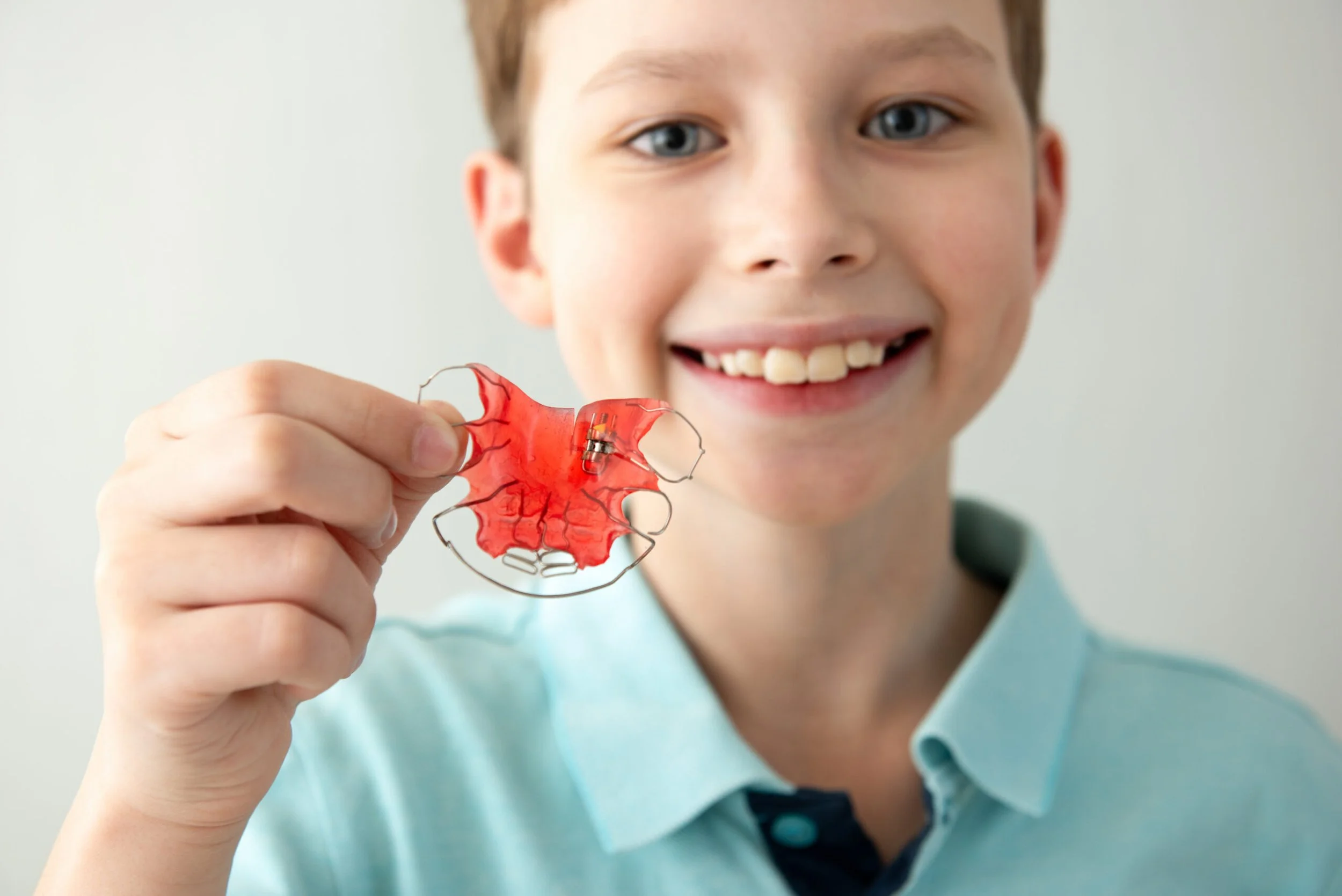
What happens at your child’s first visit?
During your child’s first visit, we assess the teeth, bite, jaw development, facial balance and eruption pattern of the adult teeth. We will explain whether treatment is needed now, whether it is better to wait, or whether no treatment is required at this stage. Our aim is to give parents clear, practical advice so they can make informed decisions without pressure or confusion.
Why choose Dee Why Orthodontics for your child?
You do not need a referral from a general family dentist to access specialist care. Orthodontics is not an add-on service at Dee Why Orthodontics, it is our entire focus. Every treatment plan is designed, supervised and reviewed by Specialist Orthodontist Dr John Sambevski, with careful attention to the teeth, bite, facial balance, comfort and long-term stability.
Our practice has been part of the Dee Why community for over 25 years, helping local families access specialist orthodontic care close to home. We welcome children from Dee Why and across the Northern Beaches, including Brookvale, Collaroy, Narraweena, Freshwater, Curl Curl, Manly, Balgowlah, Beacon Hill, Frenchs Forest and surrounding suburbs.
Convenient care for Northern Beaches families
Located in Dee Why Grand, our practice is convenient for families balancing school, work and other commitments. We provide specialist orthodontic care in a calm, friendly setting, with clear communication at each stage.
Related orthodontic information
Teenage Orthodontics
Learn more about orthodontic treatment during the teenage years.
Braces
Understand when braces may be recommended for children and teenagers.
Why Choose a Specialist Orthodontist?
Learn why timing, diagnosis and specialist planning matter.