
Managing Compromised First Permanent Molars: Timing of Extractions, Eruption Patterns and Orthodontic Intervention
Ortho Insight, August 2026 · Dr John Sambevski, Specialist Orthodontist
Compromised first permanent molars in children can be difficult to manage. The decision is rarely just whether a tooth can be restored today, but whether keeping it will create repeated problems over the longer term. When the prognosis of the first permanent molars is poor, carefully timed extraction can allow the second permanent molars to erupt into a more favourable position. Current guidance commonly places this window at approximately 8 to 10 years of age, although the decision should be guided by the child's dental development, radiographs, symptoms, malocclusion and overall restorative risk.
This case shows the value of early orthodontic input, careful monitoring, and later fixed appliance treatment in a growing patient with hypomineralised first permanent molars and a developing Class II deep bite malocclusion.
Patient overview
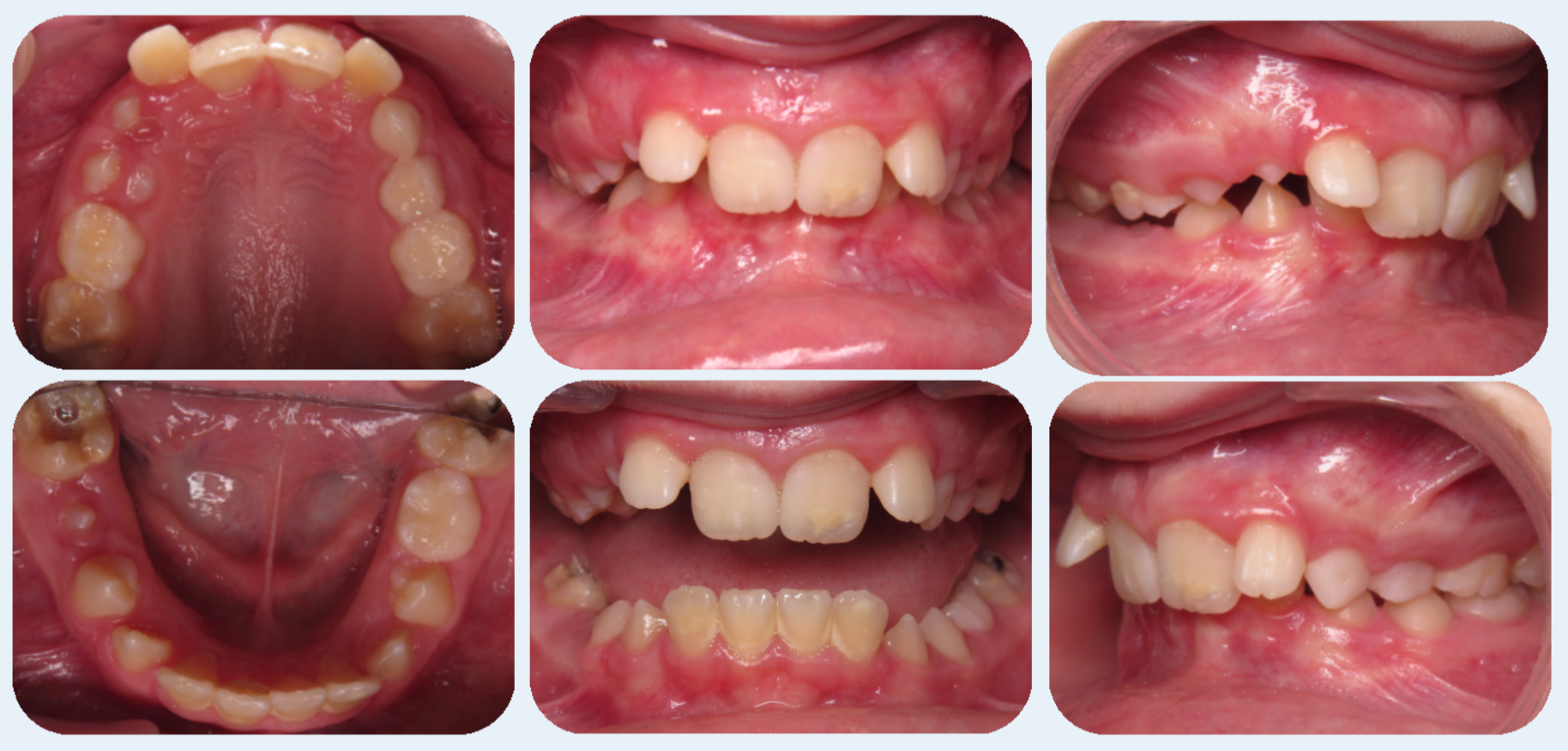
A young patient was referred for orthodontic advice regarding hypomineralised first permanent molars. The lower first permanent molars were severely cavitated, while the upper first permanent molars were affected more mildly. The patient also presented with a Class II division 2 deep bite malocclusion on a skeletal Class II base.
The referring dentist asked whether the upper first permanent molars should be removed at the same time as the lower first permanent molars. Given the guarded prognosis of the lower molars, the compromised nature of the upper molars, and the developing occlusion, removal of all four first permanent molars was recommended. The aim was to allow the second permanent molars to substitute over time, with orthodontic treatment anticipated later to help refine the result.
Diagnosis and planning
The planning challenge was not simply whether the first permanent molars could be restored, but how today's extraction decision would influence the child's future occlusion.
In children with poor-prognosis first permanent molars, well-timed extraction may allow the second permanent molars to erupt forward and close spaces more predictably, particularly in the upper arch, while the lower arch remains more timing-sensitive and requires careful radiographic assessment.
In this case, a coordinated four-molar extraction plan was chosen due to the poor prognosis of the lower first permanent molars and the more moderately affected upper molars, aiming to reduce long-term restorative burden and support a balanced posterior eruption pattern.
The key decision: the compromised first permanent molars were managed early, with comprehensive orthodontic treatment delayed until sufficient eruption of the second permanent molars.
Monitoring phase
Following extraction of the first permanent molars, the patient was reviewed at regular intervals. This monitoring phase was an important part of the plan, as success depends not only on timing of extraction but also on eruption and positioning of the second permanent molars.
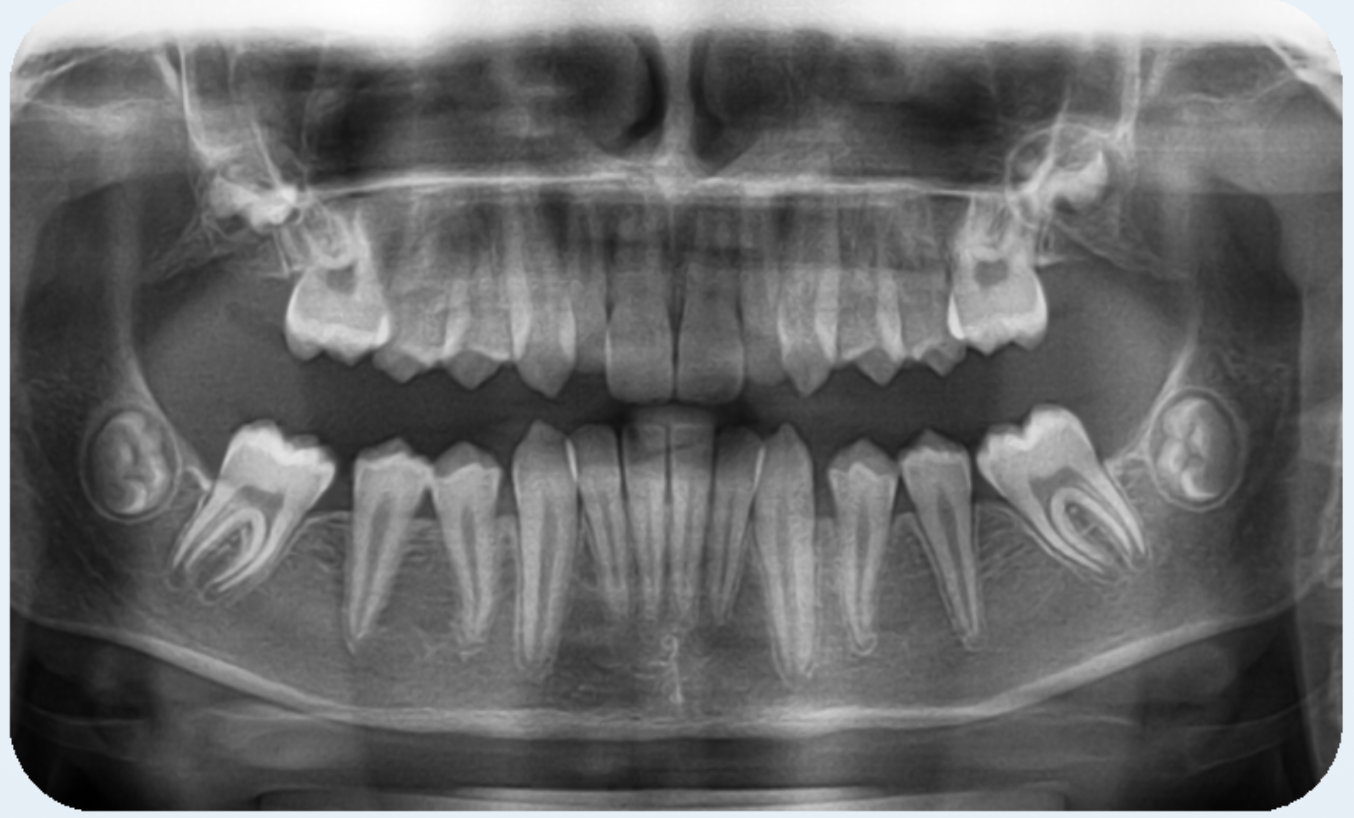
Approximately two and a half years from the initial consultation, an OPG was taken to assess posterior dental development prior to orthodontic treatment. The presence of developing third permanent molars in all quadrants was an additional finding when considering the long-term posterior dentition, although their final position and eruption would still require ongoing review.
As the permanent dentition matured, the malocclusion remained characterised by a very deep overbite and Class II division 2 incisor relationship. Comprehensive orthodontic treatment commenced in the following months, once the second permanent molars were sufficiently erupted and ready to be incorporated.
Treatment progress
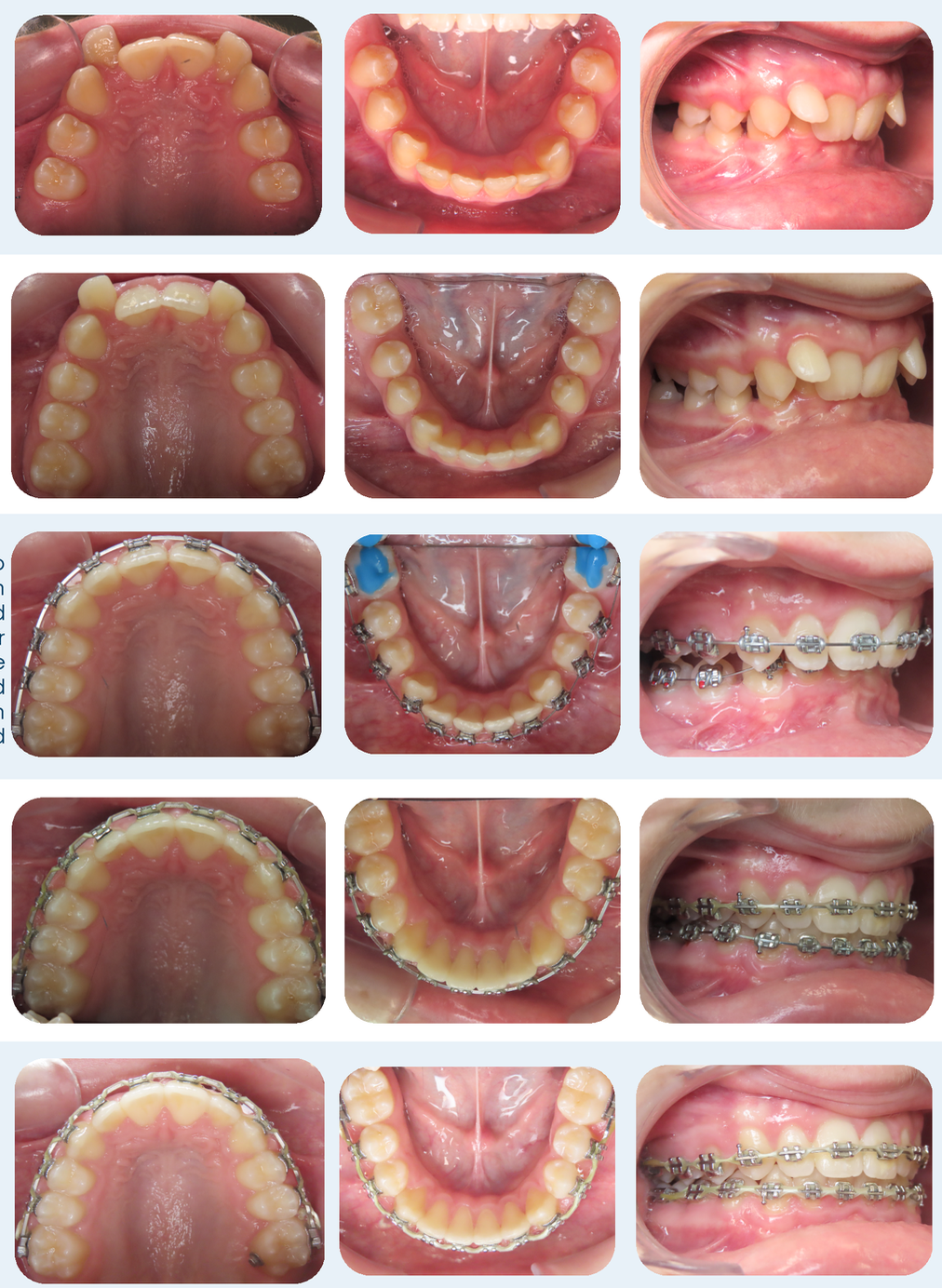
1. Removal of hypomineralised molars. Removal of all four first permanent molars was recommended. The timing was important. When poor-prognosis first permanent molars are removed before eruption of the second permanent molars, the second molars may erupt forward into a more favourable position and reduce the long-term restorative burden.
2. Eruption of second permanent molars. Treatment was not rushed. The patient was reviewed while the second permanent molars erupted into the approximate position of the extracted first permanent molars. The Class II division 2 malocclusion remained at this time.
3. Sequential fixed appliance therapy. Upper fixed appliances were placed first to unlock the deep bite and correct the angulation of the upper incisors. This improved overjet and reduced incisor interference, allowing lower bonding to be completed six months later once the bite permitted. Treatment then progressed with upper and lower fixed appliances to align both arches, improve overbite and overjet, and refine the molar substitution result.
4. Deep bite and Class II occlusal correction. Inter-arch elastics were used to assist correction of the Class II relationship. A bite opening curve on a rectangular stainless steel wire was incorporated to level the curve of Spee in the lower arch and aid deep bite reduction. This phase facilitated controlled closure of the lower extraction spaces and improvement of the overall occlusal relationship.
5. Finishing and refinement. Final detailing focused on incisor positioning, overbite control, posterior settling, and fine adjustment of arch coordination, working toward well-coordinated alignment and a stable occlusion.
Outcome
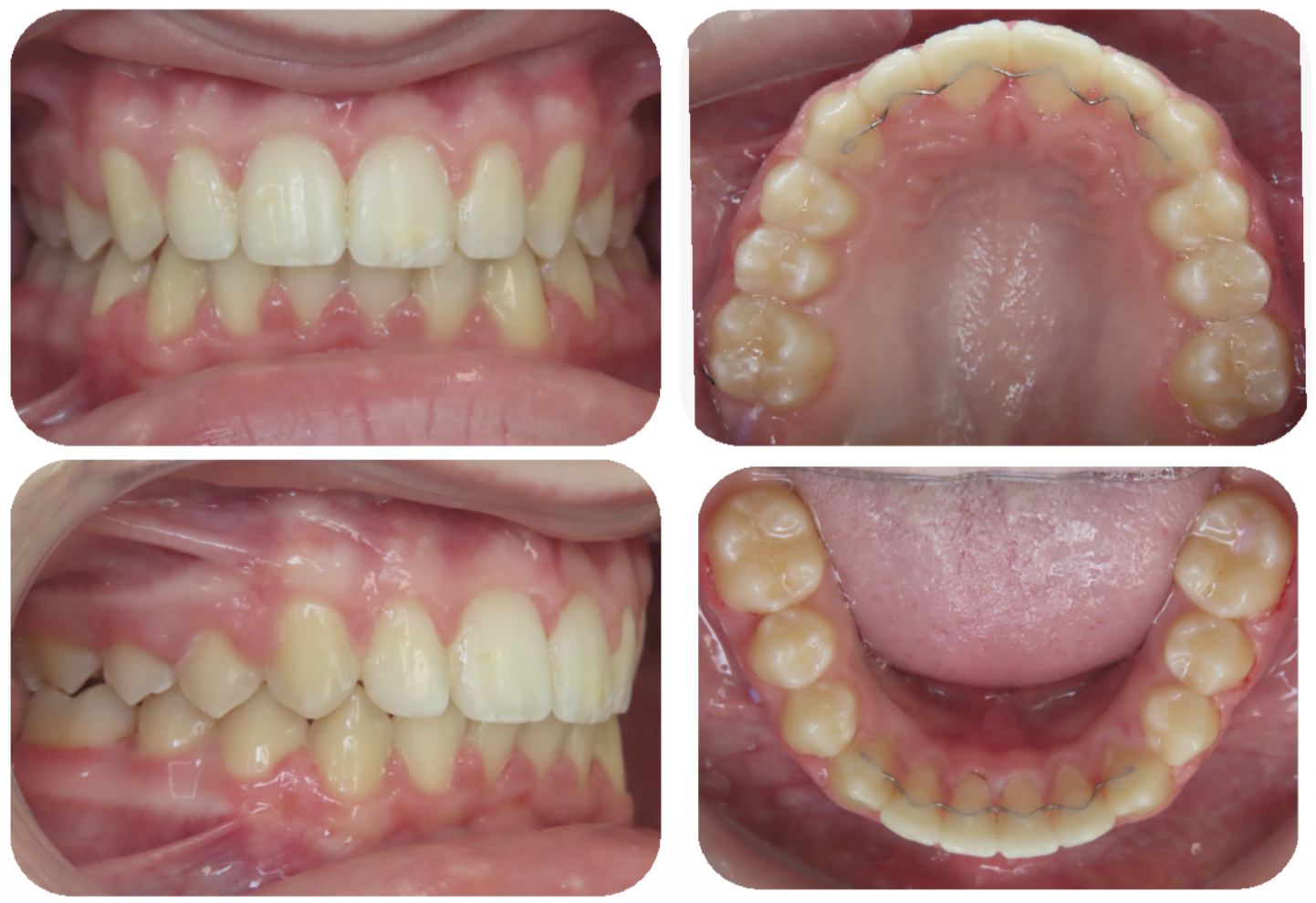
Treatment was completed over 24 months. The final records show well-aligned arches, improved incisor inclination, correction of the Class II deep bite malocclusion, and a stable functional occlusion, with the lower second molars substituting for the extracted first permanent molars. Third permanent molar development will continue to be monitored as part of long-term review. Fixed and removable retainers were provided to support long-term stability.
Key referral considerations
- Hypomineralised first permanent molars should be assessed for long-term prognosis, not only immediate restorability.
- Early orthodontic input is valuable when first permanent molars appear to have a guarded prognosis.
- The timing of extraction is important, particularly in the lower arch.
- A recent OPG helps assess second molar development, angulation and eruption stage before first molar extraction decisions are finalised.
- The presence or absence of developing third molars can influence the long-term posterior outlook and should be considered during planning.
- Post-treatment review remains important, particularly where third molar eruption may later affect the final posterior occlusion.
- Class II division 2, Class III, crowding, hypodontia or other malocclusions should prompt specialist input before extractions are finalised.
Key clinical takeaways
- A compromised first permanent molar is not only a restorative problem; it is also an occlusal development issue.
- The best orthodontic decision may be made years before braces are placed.
- Well-timed extraction can give second permanent molars the opportunity to erupt into a better position.
- Later orthodontics may still be required to refine the bite, upright molars and coordinate the arches.
- Post-treatment follow-up remains important in first molar extraction cases, as posterior dental development can continue beyond active orthodontic treatment.
- In deep bite cases, upper appliances may need to precede lower bonding to create the space needed for safe lower appliance placement.
Summary
This case highlights the importance of early orthodontic planning in children with compromised first permanent molars. Rather than treating these teeth in isolation, extraction was guided by the developing occlusion. Removal of the first permanent molars allowed second permanent molar substitution, with an OPG during monitoring supporting timing for definitive treatment. Fixed appliances then corrected the Class II deep bite malocclusion and refined the occlusion to a stable result.
For referring dentists, the key message is simple: when first permanent molars have a poor long-term prognosis, early orthodontic advice can help determine whether extraction should be delayed, expedited or coordinated as part of a longer-term occlusal plan.
Clinical pearl
When first permanent molars have a poor long-term prognosis, timing matters. The right extraction decision can create the opportunity for second molar substitution; orthodontics later helps refine the result.
We sincerely thank our referring colleagues for their trust and collaboration in the shared care of our patients. All records and photographs are used with the patient's permission.
This case is published as Ortho Insight, August 2026, our printed series posted to referring practices. [Download the print edition (PDF)]