
Periodontally-Aware Adult Orthodontics: Adapting Aligners, Fixed Appliances and Extractions to Biological Limits
Ortho Insight, May 2026 · Dr John Sambevski, Specialist Orthodontist
Adult orthodontic treatment often begins with a patient preference, commonly for aligners, but the final plan must be governed by biology, anchorage requirements and periodontal risk. This case demonstrates how staged decision-making allowed treatment to remain patient-centred while still protecting the lower incisors and periodontal tissues.
Patient overview
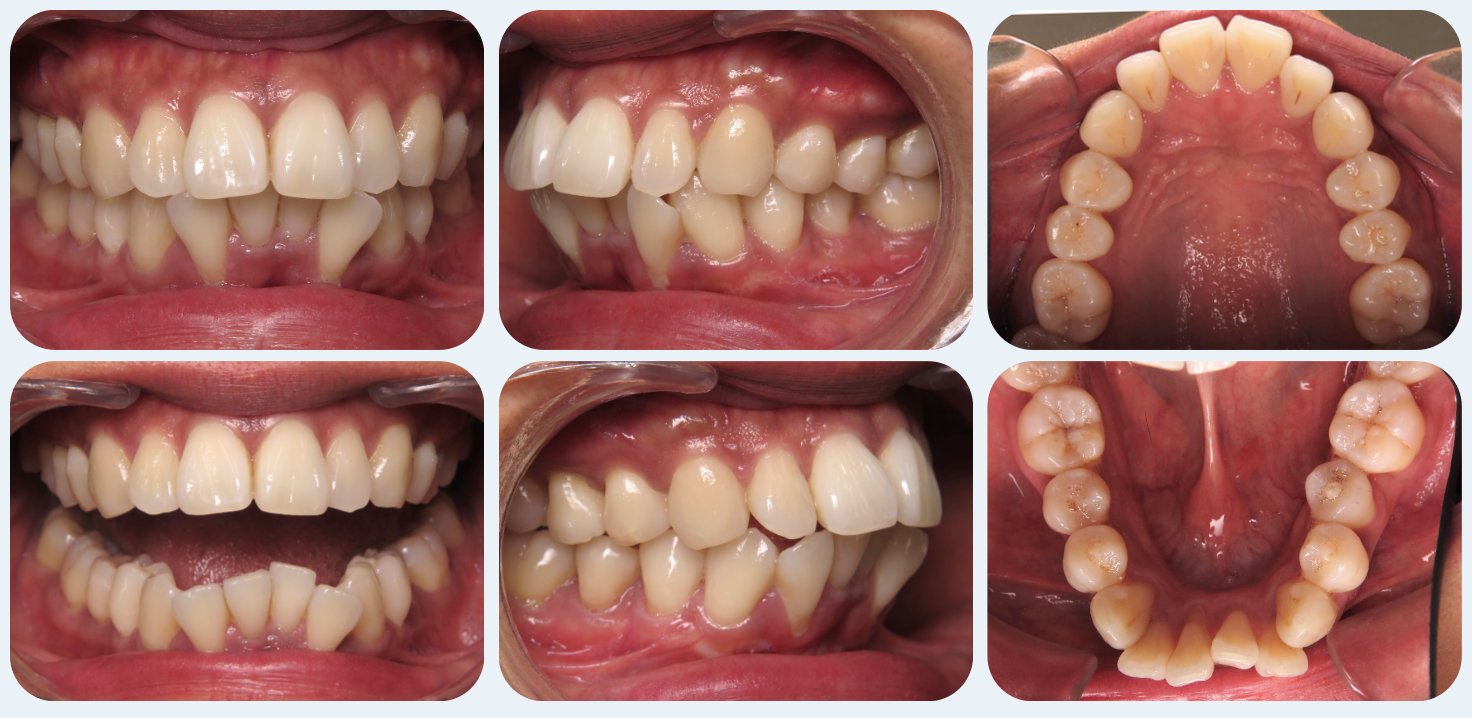
An adult patient presented for a second opinion regarding crowded, proclined anterior teeth and expressed a strong preference for aligner treatment. Clinical assessment identified increased overjet, mild-to-moderate crowding, generalised gingival recession most pronounced around the lower lateral incisors, dens evaginatus affecting the lower left second premolar (35), and a non-vital lower right second premolar (45) with associated apical pathology.
Given the combination of crowding, incisor proclination and periodontal vulnerability, treatment planning focused on controlled space creation, careful incisor positioning and a willingness to adapt appliance selection as the case evolved.
The planning challenge
The planning challenge was not simply how to align the teeth, but how to do so without worsening lower incisor proclination or recession.
Options discussed included non-extraction alignment, lower incisor extraction, and premolar extraction therapy. Given the space requirements, periodontal concerns and restorative findings, a four second-premolar extraction plan was selected.
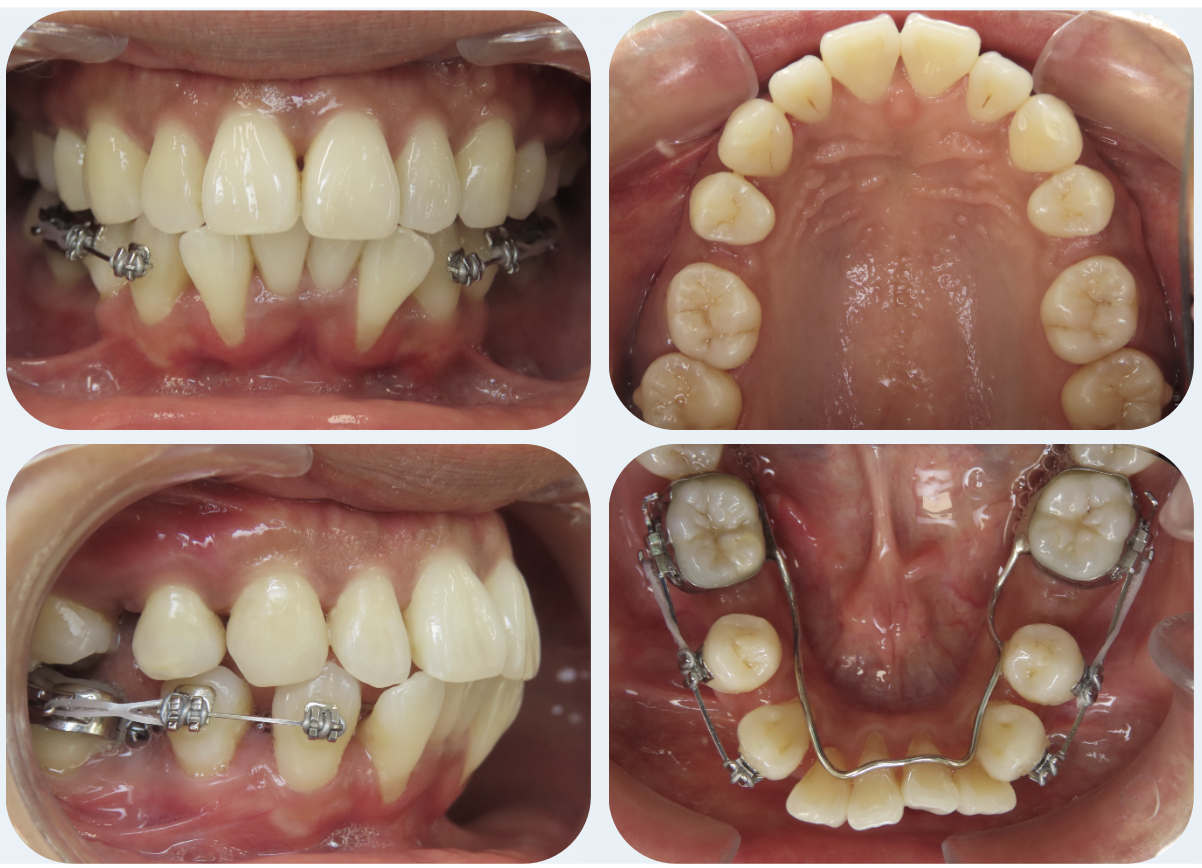
The initial appliance plan combined upper aligner therapy with lower sectional fixed appliances and a lower lingual holding arch, used to reinforce anchorage while the crowded lower canines were distalised and uprighted into the extraction spaces.
Early treatment phase
Lower incisor bonding was deliberately delayed until adequate space had been created, reducing the risk of further labial movement of already vulnerable incisors. The key decision: space was created first, and lower incisor alignment came later.
Transition to full fixed appliances
As posterior spaces closed and the biomechanical demands increased, the original hybrid plan was reviewed. Sectional mechanics had achieved their primary purpose, adequate space was available for lower anterior alignment, and more precise root control was required.
The patient elected to transition to full upper and lower fixed appliances to improve root control, simplify mechanics and increase efficiency during the more complex phase of treatment. Importantly, this transition occurred only after space had been created, allowing lower incisor alignment to proceed without unnecessary proclination.
Treatment progress
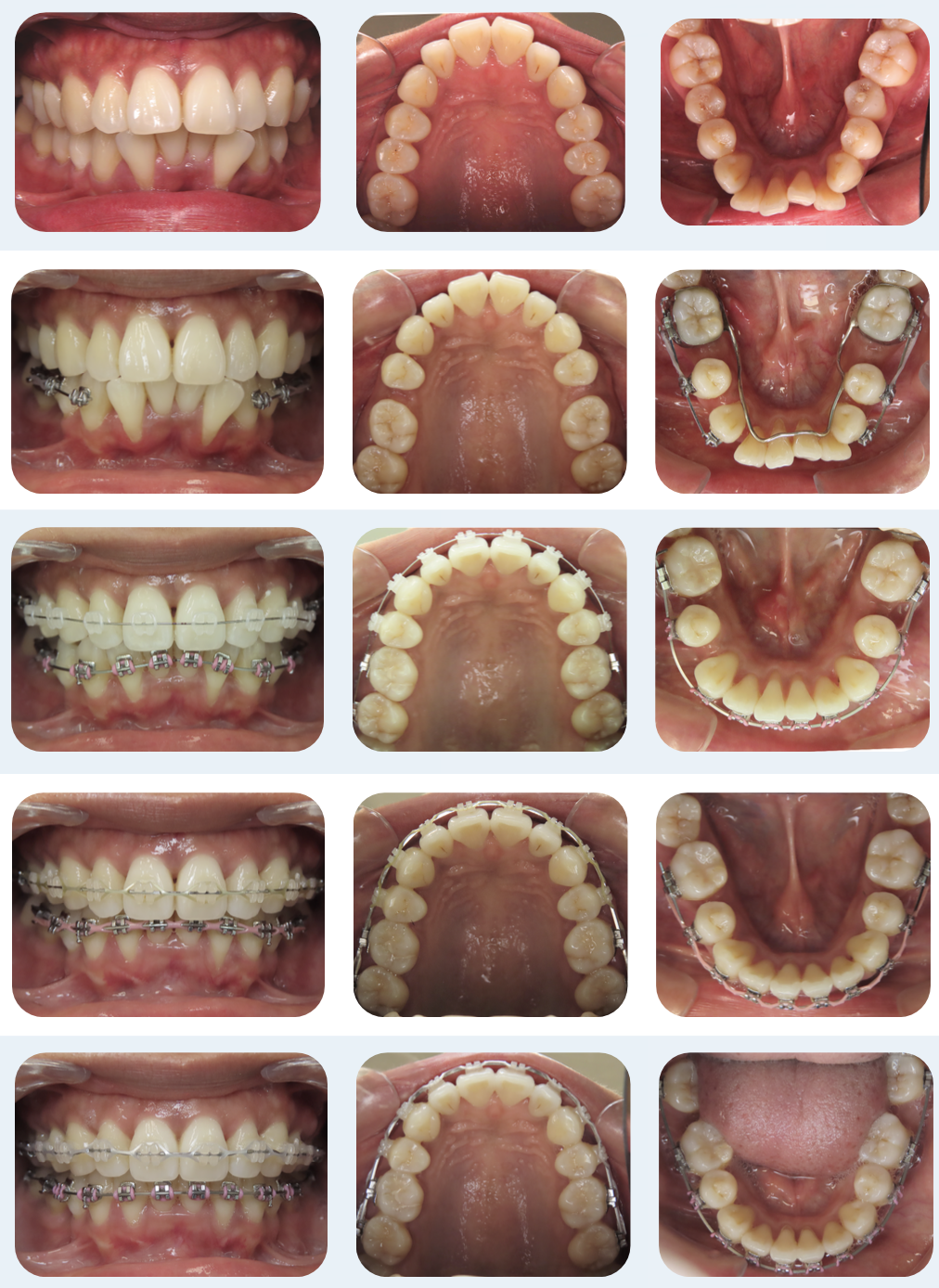
1. Extraction pattern selected. Upper and lower second premolars were selected to provide the required space while helping maintain anterior aesthetics and arch coordination. The lower left second premolar (35) also presented with dens evaginatus, which was considered in the extraction decision.
2. Space creation before lower incisor alignment. Upper aligner therapy and lower sectional mechanics were used initially. Lower incisor bonding was delayed to avoid aligning crowded incisors in the absence of space.
3. Transition to comprehensive fixed appliances. Once adequate space had been established, treatment transitioned to full fixed appliances to improve root control, upright teeth and complete space closure more predictably.
4. Active space closure and levelling. Treatment progressed to active space closure and levelling across both arches. The lower extraction spaces continued to close, the lower incisors were progressively levelled and uprighted within the available space, and the molars were brought into a more favourable position.
5. Finishing and periodontal refinement. Residual spaces were closed, posterior occlusion and incisor root positions were refined, and conservative interproximal reduction was used to improve the appearance of anterior black triangles.
Outcome
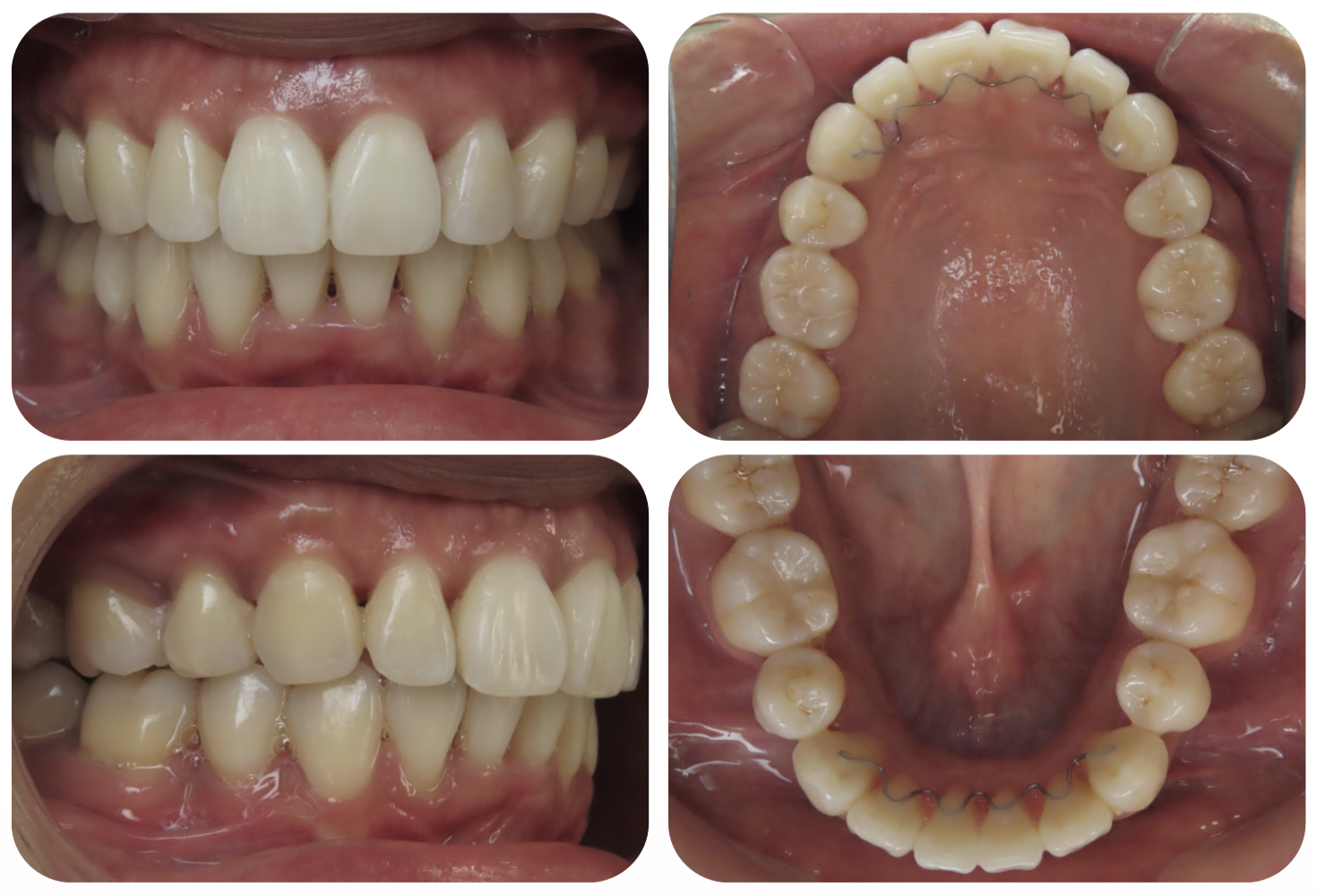
Treatment was completed over 26 months. The final records show well-aligned arches, improved incisor inclination and a stable functional occlusion. Treatment was completed with careful respect for the patient's pre-existing periodontal limitations, and the gingival appearance improved noticeably during treatment. Fixed and removable retainers were provided to support long-term stability.
Key referral considerations
- Adult patients with proclined incisors and crowding should be assessed carefully for periodontal risk before alignment is commenced.
- Lower incisor crowding in the presence of recession may not be suitable for simple non-extraction alignment.
- Early referral allows space, incisor position and periodontal risk to be considered before compromise progresses.
- Dental anomalies, non-vital teeth and restorative prognosis can appropriately influence orthodontic extraction planning.
Key clinical takeaways
- In adult orthodontics, periodontal health may appropriately take priority over idealised occlusal targets.
- Appliance selection should remain flexible; aligners and fixed appliances can be used strategically within the same case.
- Creating space before aligning vulnerable lower incisors can be critical in patients with recession risk.
- Extraction decisions should consider orthodontic, periodontal and restorative factors together.
- A staged plan can remain patient-centred while still respecting biological limits.
Summary
This case demonstrates the value of a measured, periodontally-aware approach to adult orthodontic treatment. Although the patient initially preferred aligner therapy, the plan evolved as the clinical requirements became clearer. Through selective extractions, staged space creation and a transition from hybrid mechanics to comprehensive fixed appliances, treatment achieved a functional result while respecting the patient's periodontal limitations.
Clinical pearl
Do not align crowded incisors into insufficient space in a patient with existing recession. Create the biological and mechanical conditions first, then align.
We thank our referring colleagues for their trust and collaboration in managing our adult patients. All records and photographs are used with the patient's permission.
This case was originally published as Ortho Insight, May 2026, printed and posted to our referring practices. [Download the print edition (PDF)]